

What We Left Out
On market partners, maker voices, and who gets to name the problem

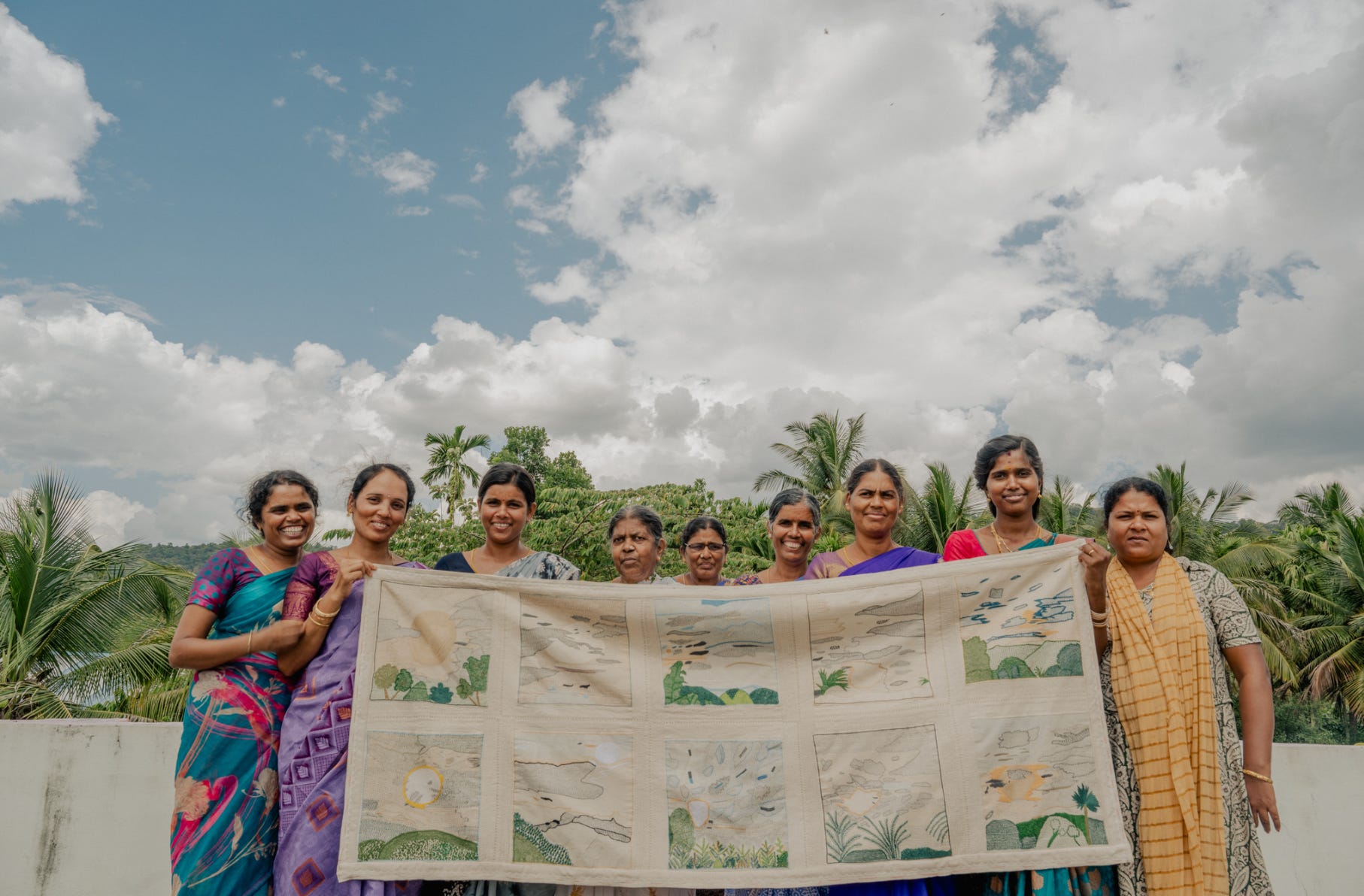
Last week, we received a comment on our Instagram post about our recent Substack essay, The Wrong Market. In that piece, we shared our belief that the artisan sector has spent decades trying to fit artisans into markets that were never designed to value what they actually create, and that what is often framed as a compensation problem is, at its core, a market design problem.
The comment came from Colectiva Malacate, a collective of women in the highlands of Chiapas. We are sharing their original comment in Spanish and the English translation in full because it deserves to be read, not paraphrased:
“La voz de las mujeres bordadoras sigue invisibilizada las reflexiones que se hacen son interesantes y en cierta manera pertinentes sin embargo todos los medios , personas, plataformas, influencers, etc que han abordado el tema hasta el día de hoy han omitido sus voces.Es importante no olvidar la agencia de las mujeres tejedoras , bordadoras, tintoreras, hilanderas en nuestro país y su capacidad de acción. Las mujeres artesanas deciden , accionan también sobre su propia práctica textil..”
“The voice of women embroiderers remains invisible — the reflections being made are interesting and in some ways relevant, but all the media, people, platforms, influencers, etc. that have addressed the topic to date have omitted their voices. It’s important not to forget the agency of women weavers, embroiderers, dyers, and spinners in our country and their capacity for action. Artisan women make decisions, they also act on their own textile practice.”
They are right. And the fact that a piece about artisan invisibility within markets could itself contribute to the invisibility of artisan voices is not just irony. It is the same structural problem showing up in another form.
Our last piece shared our perspective that the artisan sector has spent decades trying to fit artisans into markets that were never designed to value what they actually create. We still believe that. But Colectiva Malacate’s comment surfaced something our market framing did not fully hold:
Who gets to define the problem? Who gets to decide what “value” means?
We wrote from our vantage point as market partners - people who have worked with artisan communities through sourcing, capacity building, storytelling, product development, and commercial strategy. That is a real vantage point. It has given us proximity to certain patterns. It has allowed us to see how brands, retailers, NGOs, and buyers often flatten craft into labor, heritage, or campaign material.
But proximity is not the same as voice. And our analysis is not the same as agency.
The word Colectiva Malacate used was agencia - agency. Not wages. Not visibility. Not access. Agency.
Agency is the capacity of artisan women to make decisions about their own textile practice. To determine what they make, what they refuse, what they preserve, what they change, what they sell, and on what terms.
That word moves the conversation forward.
Because even a better market is not enough if artisans are still being positioned as people to be helped, represented, interpreted, elevated, or “given access.” The goal cannot simply be to build better markets for artisans.It has to be to build markets with artisans - and in many cases, to recognize the markets, networks, and systems they have already built for themselves.
Artisan women are not always waiting passively for the right brand, NGO, platform, or market partner to arrive. Many are already making deliberate choices about their work. They are accepting some collaborations and refusing others. They are setting terms. They are protecting techniques. They are adapting when they choose to adapt, and holding boundaries when they choose not to.
Their perspective exists. It just is not always the perspective being published, quoted, funded, translated, amplified, or treated as expertise.
That is the deeper problem Colectiva Malacate named. A market designed to value craft cannot only compensate artisans more fairly. It must also recognize artisan women as thinkers, strategists, critics, and decision-makers within their own fields. As authors of the work and of the discourse around it.
And we want this platform to become a place where artisan voices are not simply referenced, interpreted, or featured, but heard directly.
Colectiva Malacate didn’t simply challenge our thinking. They expanded it. Which leaves us with another question we’ve been carrying ever since:
If worker voice has become a recognized feature of healthy labor markets, what is the equivalent for the artisan sector? How should artisan perspectives, decision-making, and agency be recognized as an essential part of healthy artisan markets - not simply as stories to tell, but as voices that shape how those markets function?
We think that’s where this conversation goes next.
This is part of a continuing conversation. We’re grateful to everyone who has pushed it further than we took it.
What’s Inspiring Us
It’s so important to stay inspired these days. In closing, here’s a bit of where we’ve been finding hope, beauty and inspiration.
Aesthetic Inspiration
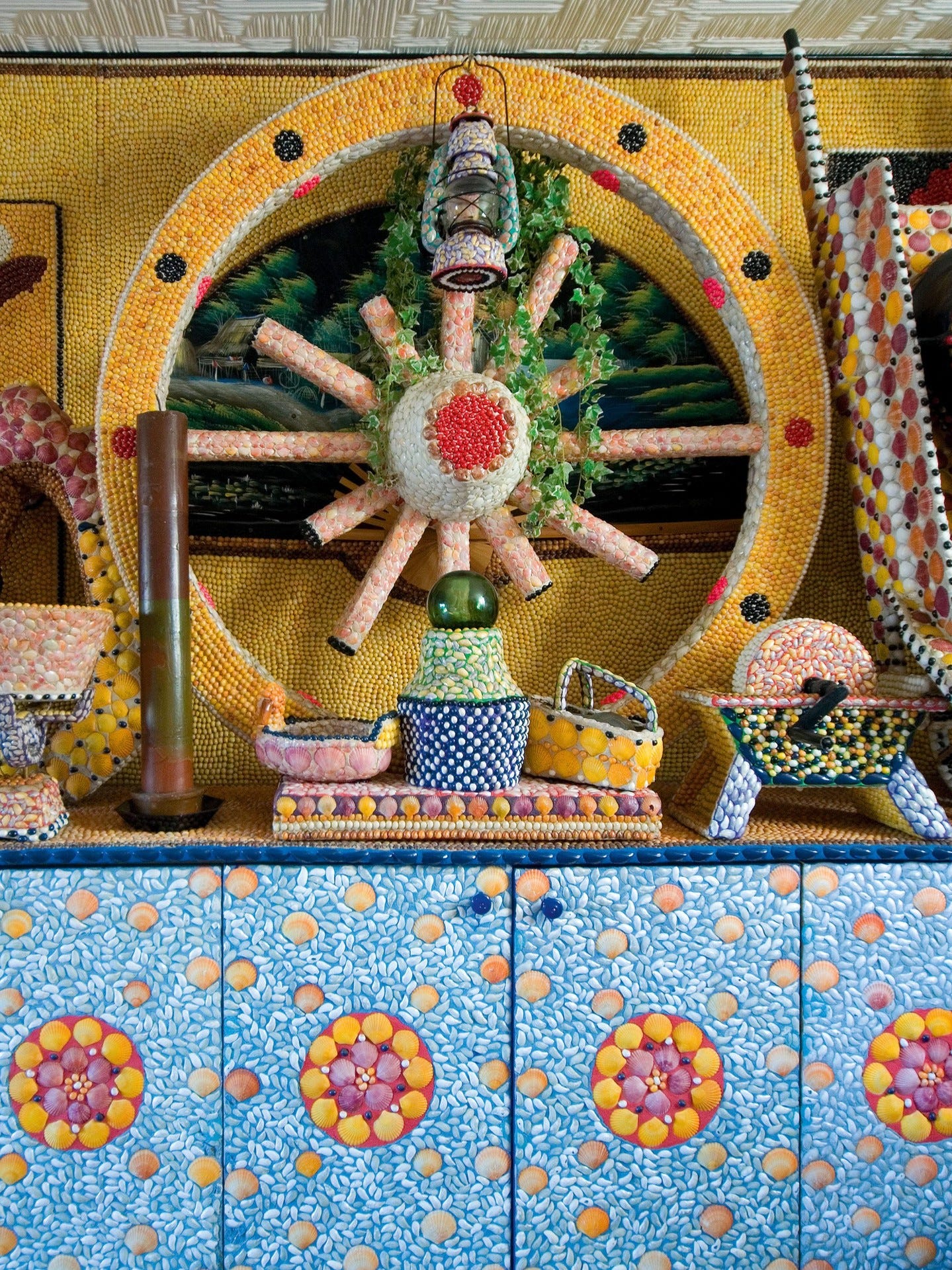
Harper: François Botherel both divorced and retired decided to encrust everything he could see with seashells. My eyeballs will be forever grateful.
Benita: Honestly, Harper’s initial images of our upcoming collection from Tanana Madagascar are what I’m finding most inspiring this week - and probably until they launch on ProudMary.co..
Cultural Inspiration
Benita: AIR MAIL just released a feature on the figureheads of American craft which is beautifully done. And I felt honored to have had the opportunity to work with three of the craft artisans featured including Mary Pettway of the Gee’s Bend quilters, Adam Brand of Fabric Flower Making and Andrea Cayetano-Jefferson of the Gullah Basket Weavers.
Intellectual Inspiration
Benita: I live in District 12 here in NYC where we just had our congressional primary. And in my research, I learned that our outgoing Congressman Jerry Nadler did quite a bit to support artist rights, specifically instituting the American Royalties Too Act of 2025. The piece here in Hyperallergic was fascinating.
—
If you made it this far, we’re grateful for you. And if you didn’t, hopefully that means you’re on ProudMary.co buying some fine folk art for your home and all your inspired spaces.
Till next time. Proud Mary